Go back
Preface and Image Credits
In 2021, before the moniker Clean-Room Exchange, I ran a community radio show on youth station SYN Media, called Nervous Nellies, until April 2022. Before Nervous Nellies, I made a short-lived music blog from July–September 2019, using the throwaway name Softliquor.
Softliquor reviewed recently purchased CDs at a time I’d started leeching my sister’s Google Play Music subscription, while weaning off my gigabytes of downloaded music. I wanted to habituate building my own collection without depending on either, incidentally leaving me in a good position when Play Music closed in 2020.
This collection started from 2017 with requesting CDs as birthday and Christmas presents, while weekend timber yard shifts funded my social life. After getting ‘career work’ in 2019 I started collecting myself, but in deal-hunting I learned about local labels with rights for overseas albums like Mistletone.
Softliquor’s importance, then, was in learning these details of an album’s publication, articulating my ‘stories’ with them, then using this knowledge to find more music. While the featured artists started as subjective favourites from my years of mass downloading, this loop turned the objective distribution of products into creative practice.
Nervous Nellies changed focus to the theme of featuring artists that sounded ‘nervous’ (defined as downtempo but not smooth), but implicitly retained this objective limitation. Following the rules of community radio (non-promotional music must be owned), my sometimes-obscure features were limited by availability in Australia, keeping access a topic of discussion.
This extended Softliquor’s methodology to digital access – timely, given Bandcamp Fridays and the like motivated artists to upload previously limited printings for income (more ‘stories’). I even reappraised internet-borne music like chiptune from my teens, which I’d discarded mid-2015 to catch up on indie trends, bringing things full circle.
After collecting my own favourites from the 2000s indie scene, and featuring/purchasing music from my teenage genres on Nervous Nellies, I’m in a better place. With my habituation cemented, blogging has become too purely subjective to resume, though Nervous Nellies re-featured every Softliquor artist so I'm not shy about republishing.
The Softliquor Archive is therefore an early example of my thoughts on David Grubbs, Black Dice, Stereolab, Deerhunter and Jerry Paper without pretense of ‘nervousness’. And given I re-featured them on archived community radio, name-dropping them is nothing new, meaning the habituation of collecting is again the focus, as intended.
Credits:
Cover: Cucumber Quest, GGDG, p.583 (first used as blog profile pic)
Rickets & Scurvy: Marcel Broodthaers
Load Blown: Rob Carmichael
Not Music: Vee
Why Hasn't Everything Already Disappeared?: Peter Ackermann
Like a Baby: Monika Mogi
David Grubbs: Rickets & Scurvy (2002) – Posted 21/7/19
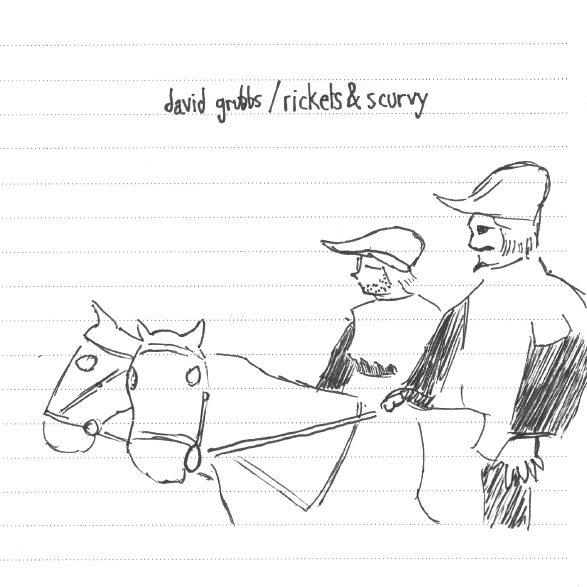
With some artists I have trouble seeing why I should like them, until I come across one song in their discography that grips me long enough that I take the time to listen more to the songs surrounding it, and then get hooked on the rest. With David Grubbs, that song was the closer of 2002’s Rickets & Scurvy, ‘Kentucky Karaoke’.
Grubbs has a history as an ‘experimental’ rock musician, which in his case means arranging traditional rock melodies and rhythms within sparse but suddenly changing song/album structures. I learned of him through Stereolab’s connection to John McEntire of Tortoise, who in the 90s was also part of the band Gastr del Sol, a joint effort between him, Grubbs and Jim O’Rourke. (Animal Collective die-hards might also recognise Grubbs from a split single with Avey Tare.) Gastr del Sol has some good examples of what I’m talking about re: traditional rock music within unconventional song structures: on their 1996 album Upgrade & Afterlife the acoustic guitar/vocals and piano/vocals songs ‘Rebecca Sylvester’ and ‘The Relay’ are sequenced next to 8+ minute drones where random noise screeches through your speakers at a moment’s notice (RIP headphone users). The takeaway is that ‘Rebecca Sylvester’ and ‘The Relay’ aren’t particularly experimental on their own; it’s more their placement alongside noise drones that makes them an experiment.
The arrangement of traditional and experimental is different in Grubbs’ solo catalogue though. Whole albums are more likely to have a cohesive sound, with the difference between them being that one might be a folk rock album with a full band (eg 2000’s The Spectrum Between), while another might be a minimalist guitar album (eg 2008’s An Optimist Notes the Dusk). Personally this made it harder for me to get a hook into any of his solo albums starting off, as the sparse guitar compositions were now grouped with 30+ minutes of songs that had the same inaccessible style, and the folk rock wasn’t especially catchy on first listen.
But ‘Kentucky Karaoke’ splits the difference. The song is similar in style to Upgrade & Afterlife’s ‘The Relay’ in that it’s mostly solo piano and vocals, this time with an undercurrent of gurgling (not screeching) synths which fill the silences left by the fade of each piano chord. It’s a simple melody with only the words ‘Here’s a prediction: when you have stories to tell, you will tell them’ repeated over a riff. But the easily digestible structure attracted me enough that to relisten to it, I would start the album halfway through, or start from the end and let it loop around to the beginning. Through these acts I found footholds in the B section of album opener ‘Transom’, the jamming outtro to ‘Don’t Think’ and the acoustic riff of ‘The Nearer by and by’. Now I can stay engaged listening from start to finish.
Getting this album physically was a quick and easy decision. Although it was first published by Drag City in the US, UK distribution is licensed through Fatcat Records, who’ve had insanely low international shipping. That label made buying Black Dice’s debut and sophomore albums a cinch too. Good stuff all around.
Black Dice: Load Blown (2007) – Posted 22/7/19
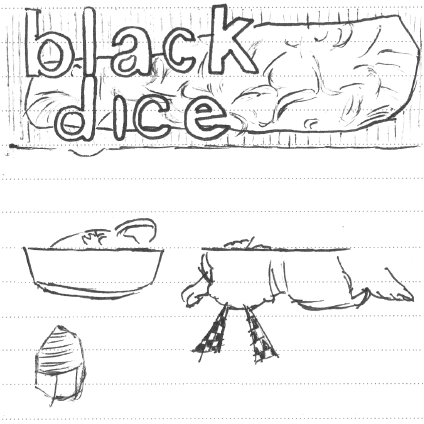
Load Blown on CD is technically one half a compilation album, as five of ten songs are sourced from two 12” singles titled Manoman and Roll Up (the former housing three tracks and the latter two). Granted, releasing singles from a future album is standard practice, so you could view Black Dice as just being especially generous by releasing half of the tracks ‘early’. The only detail that prompts me to split hairs is that on vinyl, Load Blown was only released as a 12” EP with just the 5 new songs on it – so to listen to the whole album on said medium, you’d have to buy the two singles and EP and alternate between the three. This is probably to do with publishing rights, as the Manoman 12” was released in 2006 via DFA, while from 2007 to 2009 Black Dice exclusively released music via Paw Tracks, the label run by Animal Collective. Chances are Paw Tracks weren’t legally allowed to reproduce Manoman and its B-sides on vinyl – that, or printing EPs instead of LPs was more viable in terms of budgeting.
This is all perfect for a nerd like me who thinks a lot about alternative tracklistings though. Officially there are now two different ways to listen to Black Dice’s releases from 2006–2007, as playing Manoman, Roll Up and the Load Blown EP in sequence produces a different track order to how the songs are compiled on CD. In my opinion this is one of the advantages of CDs; since I’m working with a collection of MP3s on a disc as opposed to an indivisible piece of vinyl, I can rip the MP3s and rearrange them however I like.
But enough about the album’s release history. The mid 2000s are a time where Black Dice exercised its abrasiveness on the playing field of electronica and sampling. Noise had always been a big part of the band’s repertoire – in the late 90s they smashed their way through the hardcore scene, abusing guitar feedback, stage equipment (which wasn’t theirs) and the audience alike to create as uncomfortable an atmosphere as possible. But making yourself a pariah isn’t the most sustainable thing in the world, and by the early 2000s they calmed down, redirecting their amplifiers and screaming into structured, experimental compositions that could last up to 15 minutes. (Their albums Beaches and Canyons and Creature Comforts were almost definitely inspiration for their tourmates Animal Collective’s releases from that period, such as Hollinndagain and Here Comes the Indian.)
A couple years later though and Black Dice’s compositions would surprisingly become even more minimal. Guitars and feedback are mostly out of the window, as the emphasis is now on synths and loops. But nothing is ever calm. Tracks like ‘Bananas’ squelch along at an uneasy pace, and ‘Bottom Feeder’ and ‘Kokomo’ progressively lay more and more samples over one another, while ensuring absolutely none of them are in sync. Granted, it’s nothing like the abrasiveness of their earlier work, but there’s still a tension during every second between the fast paced samples and the sluggishness of the very arrangements they’re used within. The track I experienced this most with was ‘Cowboy Soundcheck’, where every sample travels at an insane speed, mixed with oscillations and echoes which emphasise the pace but simultaneously make the music feel very distant. It has a way of sending you reeling without making you feel like you’re moving anywhere at all.
From my perspective it’s a bit fortunate that Black Dice made the jump to Paw Tracks, as my local independent label Mistletone must have some sort of deal for national publishing rights for most of their catalogue, along with several releases from Paw Tracks’ parent label, Carpark Records. Basically this means during 2018 and 2019 I’ve had quick access to several albums by Black Dice, Animal Collective members Avey Tare and Panda Bear, plus Carpark musicians like Dan Deacon, all with free delivery. Legitimately, Mistletone were a great motivator for me to get the ball rolling with purchasing physical music.
Stereolab: Not Music (2010) – Posted 23/7/19
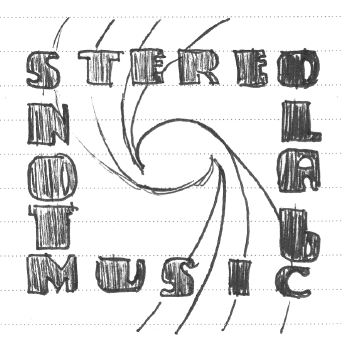
This album is a good example of why streaming is an unsustainable way of listening to an artist you give a shit about. I started listening to Stereolab 8 years after Not Music released, and despite there being a Spotify URL for the album, evidence it had been available to stream, as of writing it’s been taken down. And I’m not sure what the inciting factor would have been either. Publishing rights? It’s licensed through Stereolab’s own label (Duophonic) in the UK like most of their other music currently is. Even their comparatively obscure debut album released through Too Pure (1992’s Peng!) is accounted for on streaming services. And I say obscure because 2019 is the year where all albums from the 90s to 2004 are being reissued, except for their debut – now there’s a probable licensing conflict.
Maybe it’s more permissible to omit Not Music from streaming due to it partly being an outtakes-and-remixes album in disguise. Every new track is from the same recording sessions that resulted in Chemical Chords two years prior; songs like ‘Two Finger Symphony’ and ‘Pop Molecule (Molecular Pop 2)’ are alternate versions of tracks from said preceding album; and each half is capped off by remixes of – you guessed it – Chemical Chords songs, by the Emperor Machine and Atlas Sound respectively. (Maybe having each half end with a remix would lend the album to being listened to on vinyl? Questions for later.) Even on release, the album had the feeling of a band getting its affairs in order, as they had announced an indefinite hiatus just the year before.
Nonetheless, while Not Music is effectively Chemical Chords: Electric Boogaloo, in my opinion the album stands as the better release due to its emphasis on driving rhythms, guitars and brass, compared to its predecessor pivoting back to sunshine-pop string arrangements every third or fourth track (see ‘Chemical Chords’, ‘The Ecstatic Static’, ‘Self Portrait with “Electric Brain”’ and ‘Cellulose Sunshine’). Stereolab in the mid-late 2000s is a different beast to their 90s output. While they spent the previous decade delving into organ-tinged garage rock in the first half, and abstract, synthesiser lounge pop in the latter, Stereolab in the 21st century is a weird mix of the two – but only if you removed the descriptors ‘garage’ and ‘abstract’ from the equation (their best qualities!). The result is a more sincere sendup of easygoing lounge rock, as opposed to the partly ironic, retrofuturistic ‘space age bachelor pad music’ they branded themselves as early in their career. That isn’t to say any of their 2000s output is bad, but I do prefer when they lean less into golden oldies twee sensibilities, which is more prevalent on Chemical Chords.
A good compromise is Not Music opener ‘Everybody’s Weird Except Me’, which showcases Lætitia Sadier’s wide vocal range, while keeping the rhythm grounded by way of fast-paced bass drums, synthetic claps, and keyboard and guitar arpeggios. Frankly it’s 90% of why I bought the album on CD when it became available again. To coincide with the announcement of their whopping 7-album reissue campaign in 2019, the band put up a bunch of their vintage stock for sale on the Duophonic Records online store, which had assumedly been gathering dust in some warehouse during the 10-year hiatus. I don’t anticipate the group printing more copies of this album any time soon, so I snapped it up (along with a 3-disc compilation of EPs and non-album B-sides) before it faded further into obscurity. Maybe the record labels and streaming services have been taking the album title too literally?
I guess there is a humour to Stereolab marketing their final studio release on what it’s not; it wasn’t the output of a dedicated recording session, its streaming availability is unreliable, and the final say on how the album ends isn’t their own, due to Atlas Sound – the solo moniker for Bradford Cox, frontman of the band Deerhunter – taking the reins for the closer. Letting Cox have the final word by way of a Chemical Chords remix even has a sort of passing-the-torch quality to it, as both his solo and group efforts have traces of Stereolab’s characteristic blend of textural-ambient, garage-fuzz, alternative rock – but for a new generation, with new and exciting neuroses. Hell, 2010 was also the year that Deerhunter put out their widely acclaimed album Halcyon Digest, so having Cox on there may as well be another way for Stereolab to keep their finger on the button of alternative music. I’m certainly more content with this being their final album than if they bowed out immediately after 2008.
Deerhunter: Why Hasn't Everything Already Disappeared? (2019) – Posted 12/8/19
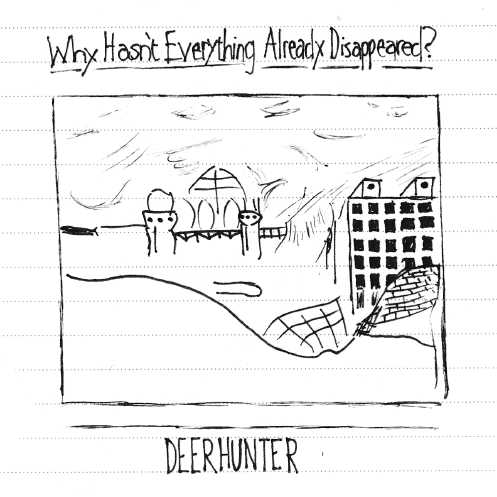
For nearly a decade it’s been the trend to rank every new Deerhunter album against 2010’s Halcyon Digest, possibly their most critically and commercially successful release – but generally this is moot. Was 2013’s Monomania, a smaller scale detour into garage punk, neon diner Americana, ever intended to be a successor to Halcyon’s behemoth dream team of shoegaze and folk rock? Or was the life-affirming synth pop of 2015’s Fading Frontier the one meant to be a follow up? Neither fit the bill, and nor should they have to, but funnily enough, in my opinion it was January’s Why Hasn’t Everything Already Disappeared?, an album very explicitly about disdain and an inability to do what they want due to the limitations of the music industry, that ‘finally’ surpasses Halcyon in quality.
Deerhunter frontman Bradford Cox wears his disillusionment on his sleeve with this release. In contemporary interviews he’s stated his displeasure at being in a band called Deerhunter, and feeling stuck with a name chosen over ten years ago. The album cycle, too, feels like a meaningless slog. The cost and arbitrariness of narrowing down a lifetime of material into 30–40 minute chunks is tiring, especially considering the dominant way of listening to music is through curated or procedurally generated playlists where artists earn fractions of cents per stream. Presentation of one’s music must seem to Cox as being more out of his hands than ever, compared to the late 2000s where he spent his free time running a music blog where he uploaded entire albums worth of self-recorded music for free. But the rapport between him and his online fans seems to have taken its toll as well, considering he’s since privated his blog – and when compounded with album after album of leaks occurring sometimes months before an intended Deerhunter or Atlas Sound (his solo moniker) release, it’s fair to say Cox has tolerated some of the worst aspects of the music listener archetype. Ravenous, uncompromising, while treating the artist as a free music repository, much less a person.
It’s claimed that the release of the limited edition, tour-only cassette Double Dream of Spring last year wasn’t intended as an artistic statement about music as a commodity or what have you, though the circumstances of its production say enough. As a band signed to a large but independent record label, 4AD, there are requirements for financial returns that seemingly restrict Deerhunter from putting out something small like an EP at this stage in their career. Releases have to either be as significant as a studio album (which is a straightforward pathway towards larger sales, music videos, reviews and tours, no matter the production cost), or, as Double Dream of Spring shows, as small as a lo-fi cassette recorded at home and sold only at gigs – sidestepping 4AD’s budgetary concerns about distribution, marketing and licensing for streaming services. The increasing divide between micro and macro production, with nothing in between, affects even the most acclaimed of independent musicians.
That said, following the micro release of Double Dream, 2019’s Why Hasn’t Everything Already Disappeared? plays things straight enough in terms of macro, studio-recorded albums – but Deerhunter doesn’t seem happy with the show going on. The very first sounds are of a less than modern harpsichord riff that repeats for the whole of the first track (‘Death in Midsummer’) as the song grows in intensity around it. Bradford Cox plays the role of a priest giving last rites to a whole country town, at first calmly requesting the listener ‘cast [their] fears aside’, but then going on to grieve the farmers and factory workers who ‘worked their lives away’, until stating most matter of factly: ‘they are in graves now’. Songs cover the incomprehensibility of death, both in terms of what the point of it is (see ‘Death in Midsummer’), what it feels like (‘Nocturne’, ‘Détournement’) and how the living view it (‘What Happens to People?’) as well as how they’re affected by it (‘No One’s Sleeping’). Pastoral tunes like ‘Element’ (which itself isn’t too far off the folksier tracks on Halcyon Digest like ‘Don’t Cry’ and ‘Revival’) are given a baroque twist with the addition of strings and keys, evoking more of a European, The Kinks are the Village Green Preservation Society feeling than the band’s preceding work. Continuing the global theme is the introduction of marimba to songs like ‘What Happens to People?’ and ‘Tarnung’, reprising their inclusion in Double Dream of Spring tracks like ‘Faulkner’s Dance’. But throughout there is still an undercurrent of string-like synths, keeping the music in the present day.
I guess the counterpoint to Bradford Cox’s pessimism in contemporary interviews is the reason why he remains with Deerhunter: he considers his bandmates family, some of which he’s played together with for almost two decades. With many members experiencing bereavement in the past few years, along with dour attitudes about global affairs and the music industry, the group holds strong in their mastery of composition, performance and production, even being skilled enough to make a tour cassette be as valuable as a studio album. It’s hard to be certain what the next step is for this band when everything around them is fading, but I’m very grateful for Deerhunter to have played the game straight enough that their millions of musical ideas could be distilled, recorded, printed and distributed at my local electronics store. (No convoluted story about how I bought my music this time – I just picked up a copy on release.)
Jerry Paper: Like a Baby (2018) – Posted 6/9/19
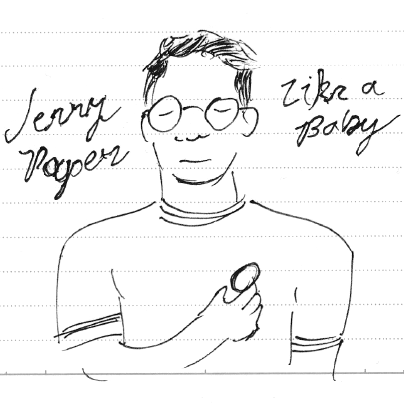
It’s no coincidence that the cover art for Jerry Paper’s 2018 release, Like a Baby, is similar in composition to their 2014 album Feels Emotions; just the artist, with some set dressing that corresponds to the album’s themes (the egg in the former, and the pie face and low-poly suit in the latter). You might notice that the decorations in the former are more subtle – just a cheesy green outfit and a small prop – more reminiscent of a typical musician photoshoot. This is because both albums are effectively rebrands as Jerry (real name Lucas Nathan) takes progressive steps towards the mainstream indie scene, and away from the miscellany of Bandcamp-only releases (with occasional limited edition cassette and vinyl prints) – with Like a Baby being their latest and greatest step.
Jerry Paper began releasing music in 2010 and 2011 under two separate but related identities: Zonotope and the Diane Kensington Devotional Band. A single narrative linked the two, which had to do with a sci-fi, interdimensional god called the Mainframe, who more or less communicates with our world through the internet. ‘Diane Kensington’ is a religious pundit for said Mainframe, whose devotional group puts out songs of praise by way of wordless, discordant MIDI orchestras. This links to their current persona as ‘explained’ in the Bandcamp description for Feels Emotions: Jerry is said to be an ex-member of the Mainframe’s devotional group, having been hired as a resident musician for one of the church’s cruise liners. However, they parted ways after their demands for a backing band were deemed too excessive, such as composing a song for 400 saxophonists. The subsequent ‘joke’ of Feels Emotions, then, is that the album is supposedly unfinished, as Jerry never got the session musicians they asked for, so what we’re left is the synth-only ‘demo tracks’.
Now, none of this stuff about the church of the Mainframe comes up in the actual music – which distances the album, and by extension, Jerry’s new persona, from these earlier high concepts. Although Feels Emotions wasn’t the first release under the name Jerry Paper, being preceded by 2012’s Vol. 1, and 2013’s International Man of Misery and Fuzzy Logic, it was nonetheless the album that put Jerry at the forefront: on the cover, in the title (ie, ‘Jerry Paper Feels Emotions’), and in the songs (which include titles such as ‘I’m Jerry, Right?’). Earlier albums laid the groundwork for their new lyrical focus: a poststructuralist reckoning with the limits of human communication and connectivity, again with no Mainframe in sight. But Feels Emotions was the one that put the face to the name, even being accompanied by a promotional YouTube documentary titled ‘Who Is Jerry Paper: The Infinity Between One and Zero?’.
2018’s Like a Baby more or less reprises this marketing effort with a new level of professionalism. The two albums after Feels Emotions, Big Pop for Chameleon World and Carousel, leaned into the lo-fi synth pop niche they created for themself by literally using MIDI sequencers as their backing instrumentation, which gained them some notoriety in a time when retro synth albums like Mort Garson’s Plantasia were amassing memetic levels of popularity. Then 2016’s Toon Time Raw! turned this gimmick on its head by being their first album recorded with a studio band, under the pseudonym Easy Feelings Unlimited. It became common knowledge though that the backing band was actually the Canadian jazz quartet BADBADNOTGOOD, who were also surging in popularity due to their brushes with hip hop royalty such as Ghostface Killah, Snoop Dogg and Kendrick Lamar. Like a Baby brings things full circle for Jerry by returning to a more synth-focused sound, with more, well, everything. Jerry is now signed to the Los Angeles label Stones Throw, which hosts indie contemporaries like Mild High Club, while additional production and instrumental contributions are lent by BBNG’s Matty Tavares and Leland Whitty, plus guest vocals by Weyes Blood and Charlotte Day Wilson (who also featured on a previous BBNG album). Music videos for the album are directed by Adult Swim alumnus like Alan Resnick and Cole Kush, inching Jerry closer to indie music-comedy double threats like Liam Lynch and Wham City veteran Dan Deacon...All this to say that Jerry is now ‘officially’ on the map.
So...what is it that they’ve put on the map? Well, the main thing is that the production and synth work is far cleaner than their albums from 2013–2014 – and there’s no MIDI orchestra in sight. Real drums replace the digital sound effects and body percussion of previous releases, with aforementioned vocal contributions from Weyes Blood and Charlotte Day Wilson harmonising or playing counterpoint in songs like ‘Grey Area’ and ‘Commercial Break’. Jerry is also a far better singer than they were half a decade ago, and it seems they knows it given their regular vocalisations in between and at the end of lyrics. My main criticism would be the brevity of many of the songs, with the album comprising 13 tracks that average 2–3 minutes, barely scraping over the half an hour mark. Not that short albums are bad, but songs like ‘Grey Area’, ‘My God’ and ‘Huge Laughs’ flutter by with a simple verse-chorus and then stop without any notice, or further development. (A better example of a short album would be the 36-minute Why Hasn’t Everything Already Disappeared?, which spans 10 tracks that range from 2–6 minutes with plenty of time to develop songs when needed.) And that isn’t to say that something like ‘Grey Area’ is bad either; it’s a beautifully wistful tune with great interplay between Jerry and Weyes Blood, but you only really notice it’s there after the song is already done. But maybe that’s the point – to write short, dreamy ditties that slide in and out of curated and procedurally generated playlists, and hopefully leave the listener thinking, who was that? Who is Jerry Paper: the infinity between Mac DeMarco and Homeshake on my Spotify? It’s a more accessible sound than the MIDI orchestras, and combined with the song brevity it might prove a good way of capturing a mainstream audience’s attention. Despite being a tad lacking as a studio album, I’m glad they no longer have to rely on cult fascination from YouTubers with esoteric names like Phone Sex who upload their albums in full with zero affiliation (or legality).
It was a pleasant surprise to be able to buy this on CD from my local electronics store (meaning the marketing budget for this one was high enough to distribute copies internationally), albeit on special order with mandatory delivery. With any luck I’ll be able to pick up their next release in-store, which would be a clear marker of how far they’ve come.
NB from 2024: CDs of Jerry’s 2020 album Abracadabra did not make it to local shelves due to there being a pandemic. But their vinyl and digital only 2022 album Free Time did, so I’m sure it would have if not for that.
Go back